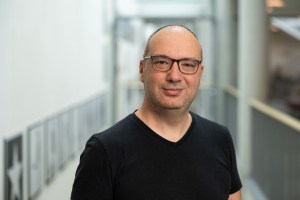
I am Professor of English Language Education at Mälardalen University (Sweden) and the editor of Classroom Discourse (Routledge). I am leading Mälardalen INteraction & Didactics (MIND) Research Group and SOLD Research environment at Mälardalen University. I have a PhD degree in Educational and Applied Linguistics (Newcastle University, UK), and my research deals with classroom discourse, L2 interaction, and language teacher education.
Before joining Mälardalen University, I worked at Hacettepe University, Newcastle University, University of Sunderland, and Luxembourg University. I also worked at Doshisha University in Japan as a visiting professor (JSPS Research Fellowship) in 2025. My research primarily focuses on the analysis of discourse and interaction in institutional settings- mainly in second/foreign/additional language (L2) classrooms- with an aim to analyse and enhance teaching and learning practices as well as the processes involved in teacher education and professional development. I have also worked as a language teacher in Turkey and the UK and have been actively involved in teacher education in Turkey and Sweden.
I have worked closely with language teachers to create engaging, interactive, and constructive teaching and learning environments. I am dedicated to informing L2 teachers based on micro-analytic, empirical findings and developing reflective frameworks for teacher development. My publications have investigated (1) interactional troubles and how they are resolved in English language classrooms (e.g., Sert and Walsh 2013 ), (2) embodied/multimodal resources in language teaching (e.g., Sert 2015; Sert 2019a), (3) multilingual repertoires in language classrooms (e.g. aus der Wieschen and Sert 2021; Sert 2021), (4) online L2 interactions and language development (e.g. Balaman and Sert 2017 ; Sert and Balaman 2018; Çimenli, Sert & Jenks 2022), (5) CALL teacher education (e.g., Sert and Aşık 2020; Sert and Li 2017), (6) the development of interactional competence (Sert 2019b) and IC in oral proficiency assessment (Hırçın Çoban and Sert 2020), (7) classroom interaction in language teacher education (Sert 2019c; Sert 2021), (8) English as a Medium of Instruction in higher education (e.g. Duran & Sert 2019; Duran, Kurhila & Sert 2022; Duran & Sert 2021), and (9) learning potentials in group work in L2 classrooms (Sert & Amri 2021). I have also investigated the use of video-tagging tools and other technologies for reflection and feedback practices in teaching (Aşık, Sert & Miller, 2024), teacher education (e.g., Çelik, Baran and Sert 2018; Sert 2019c; Sert 2023; Bozbıyık, Sert & Bacanak 2021; Gynne, Larsson and Sert 2022; Sert, Gynne & Larsson 2025), and professional development (Sert & Jonsson, 2024; Sert, Wulff Sahlén & Schröter, 2025). I recently started investigating the use of AI for reflective practice, in particular in relation to classroom discourse (Sert, 2025).
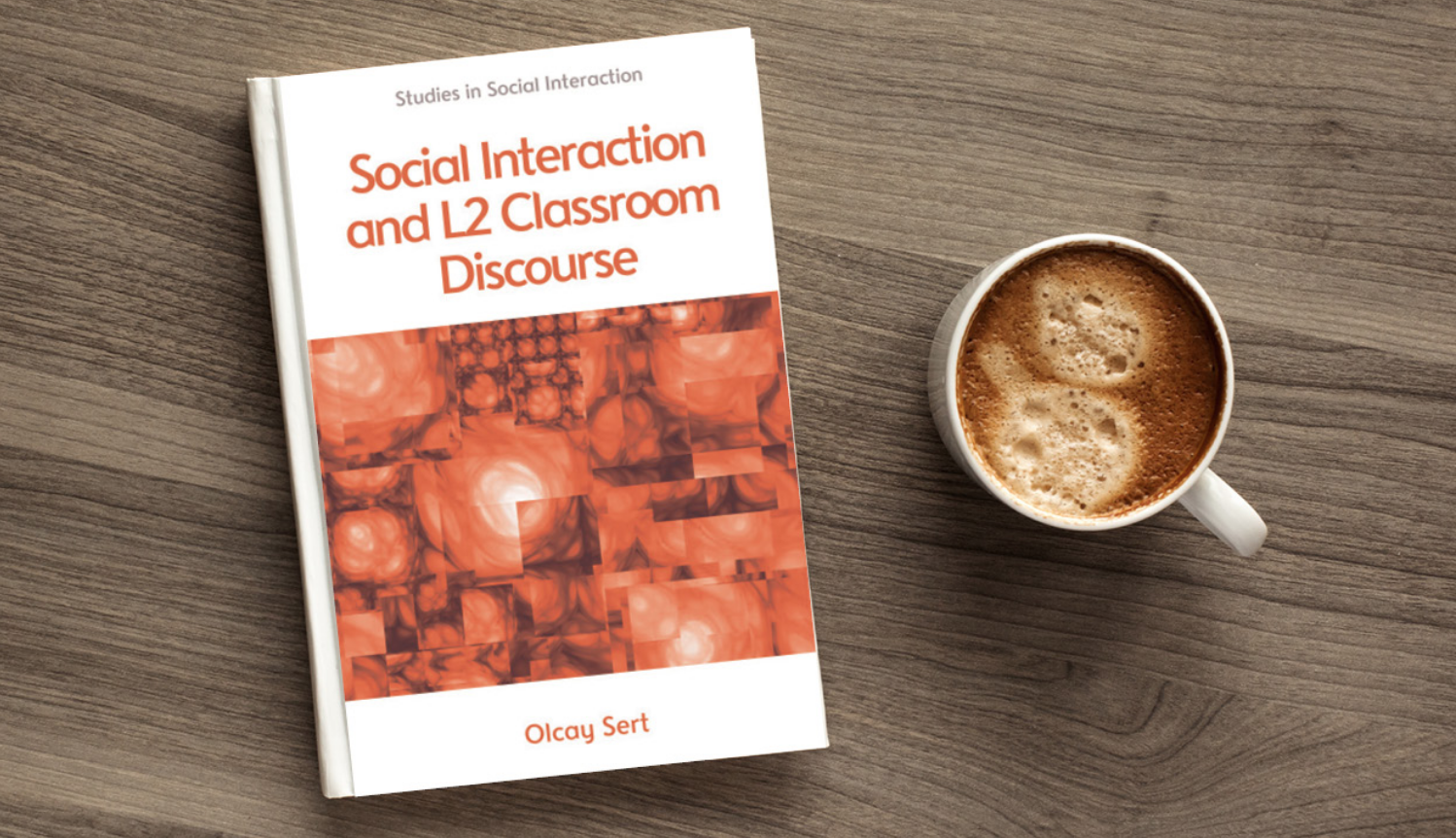
My book ‘Social Interaction and L2 Classroom Discourse’ (Edinburgh University Press) investigates language classrooms from a conversation analytic perspective and provides strong implications for language teaching and teacher education. The book has been shortlisted for the British Association for Applied Linguistics Book Prize 2016 and was a finalist for the American Association for Applied Linguistics first book award 2017. I also edited (with Silvia Kunitz and Numa Markee) a volume entitled ‘Classroom-based conversation analytic research: Theoretical and applied perspectives on pedagogy’, which was published by Springer in 2021. I edited another volume (Springer) on the impact of conversation analysis in teacher education with Hansun Waring (Sert & Waring, 2025).
In my classroom interaction courses, I have used and developed and implemented “Transcription and video-based guided discovery tasks” (Sert, 2026), which help teachers develop interactional awareness. I have extended this line of work to online, transnational teacher education, in particular with a focus on virtual exchange activities between student-teachers in Sweden and Japan (Sert & Ishino, 2025). My work on teacher development has resulted in the development of new research methodologies, including Discursive Timeline Analysis and Collaborative Micro Auto-ethnography.
I have been involved in projects funded by grants from ‘Fonds National de la Recherche Luxembourg’, ‘European Union (Erasmus +)’, ‘Danish Agency for Science, Technology, and Innovation’, the British Council, and MKL. I have worked on the analysis of data that come from Swedish, Luxembourgish, Turkish, Danish, Czech, Finnish and UK contexts. I recently completed Digi-REFLECT (together with my colleagues Annaliina Gynne and Maria Larsson), a 3-year development and research project funded by MKL and Samhällskontraktet. I am currently involved in an EU project (AI-Write, 2023-2026) on the use of AI tools in higher education, funded by the EU. I am also a collaborator on a project on the use of telepresence robots in classrooms, led by Teppo Jakonen and funded by the Academy of Finland. With my current and forthcoming research on interactions in pedagogical settings, I am working on improving research, teaching, and teacher education practices in Sweden and beyond.
Reviews of Social Interaction and L2 Classroom Discourse
A very important contribution to both existing academic research and L2 education practice and policy.
BAAL Prize Committee 2016
It is an important contribution to the field of applied linguistics because it consolidates ideas in conversation analysis in order to make recommendations for L2 pedagogy that are both well-warranted, deriving as they do from a robust empirical record, and exceptionally practical.
AAAL Book award committee.
Sert successfully shows how CA findings can provide a deeper understanding of classroom interaction, show evidence of the development of CIC in practice, inform teacher-training programs, and potentially influence educational policy.
Lauren Carpenter
 Olcay Sert